
A Step-by-Step Guide to Safeguarding Road Salt and Sand
Municipal departments and construction companies know the drill: winter operations depend on reliable access to road salt and sand. But storing these materials improperly can lead to environmental damage, material loss, and unnecessary expenses. Whether you manage a small municipal fleet or oversee multiple storage sites, understanding proper safeguarding techniques protects both your budget and the surrounding environment.
This guide walks you through practical strategies for storing road salt and sand responsibly. You’ll learn how to select the right storage site, implement effective protection methods, and maintain your storage infrastructure for years to come.
Understanding the Risks
Before investing in storage solutions, it’s important to understand what’s at stake when road salt and sand aren’t properly protected.
Environmental Concerns
Salt runoff presents a serious threat to local water sources. When salt stockpiles remain exposed to rain and snow, dissolved chlorides wash into groundwater, streams, and lakes. This contamination harms aquatic life and can make water unsafe for drinking. Vegetation near unprotected salt piles often shows signs of distress, including browning and stunted growth.
Sand storage creates different problems. Wind erosion carries fine particles into the air, contributing to dust pollution that affects air quality and nearby properties. Rain can wash sand into drainage systems, causing blockages and maintenance headaches.
Economic Concerns
Weather exposure wastes valuable materials. A single rainstorm can dissolve significant amounts of salt, while wind scatters sand across your site. These losses add up quickly, forcing you to purchase replacement materials more frequently than necessary.
The costs don’t stop there. Environmental remediation can be expensive if contamination reaches critical levels. Many municipalities also face pressure from residents and environmental groups to demonstrate responsible storage practices.
Best Practices for Storage
Effective storage starts with smart planning and the right infrastructure.
Site Selection
Location matters tremendously. Choose a storage site at least 300 feet from wells, streams, or other water sources. This buffer zone helps prevent contamination if minor runoff occurs.
Pay attention to natural drainage patterns. Your storage area should sit on ground that slopes away from environmentally sensitive areas. If natural drainage isn’t favorable, you may need to install berms or diversion channels to redirect water flow.
Consider proximity to treatment operations as well. Storing materials close to where they’ll be loaded and mixed reduces transportation time and fuel costs.
Storage Methods
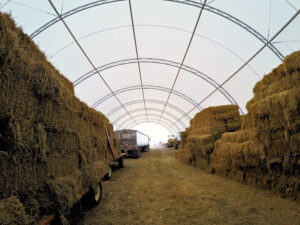
Fabric hoop buildings offer exceptional protection for road salt and sand storage. These structures shield materials from rain, snow, and wind while providing easy access for loading operations. Unlike traditional buildings, hoop storage buildings can be erected quickly and cost significantly less than permanent structures.
We specialize in fabric hoop buildings designed specifically for salt and sand storage. These buildings feature:
- Weather-resistant fabric that blocks precipitation while allowing ventilation
- Clear-span design with no interior columns, maximizing storage capacity
- Natural lighting that improves safety during loading operations
- Rust-resistant frames that withstand corrosive salt environments
If covered storage isn’t immediately feasible, proper tarping can provide temporary protection. Use heavy-duty tarps that extend beyond the pile’s base, and secure them thoroughly to prevent wind damage. Stack materials on impervious pads rather than bare ground to minimize leaching.
Maintenance Tips
Even the best storage systems need regular attention to remain effective.
Inspect your storage structure at least quarterly, with additional checks after severe weather events. Look for fabric tears, frame corrosion, and drainage problems. Small tears can be patched quickly, but large damage may require professional repair.
Keep gutters and drainage systems clear of debris. Blocked drains can cause water to pool near your storage area, increasing contamination risk.
For hoop buildings in Iowa and similar climates, snow accumulation deserves special attention. Remove heavy snow loads promptly to prevent structural stress. Freedom Buildings’ team can provide guidance on snow load management specific to your building design.
Document all maintenance activities and repairs. This record helps you identify recurring issues and demonstrates responsible management practices to regulators and the public.
Protect Your Investment and the Environment
Proper road salt and sand storage isn’t just good environmental stewardship—it’s smart business. Protected materials last longer, reduce replacement costs, and help you avoid expensive remediation projects.
Fabric hoop buildings from Freedom Buildings provide a proven solution for municipal and commercial storage needs. With over 3,000 installations across the United States, our team understands the unique challenges of salt and sand storage.
Our experts can help you select the right building size, discuss hoop building prices, and answer questions about installation timelines.
Ready to upgrade your storage infrastructure?
Contact Freedom Buildings for a free consultation on hoop building and agricultural fabric buildings solutions tailored to your specific requirements.